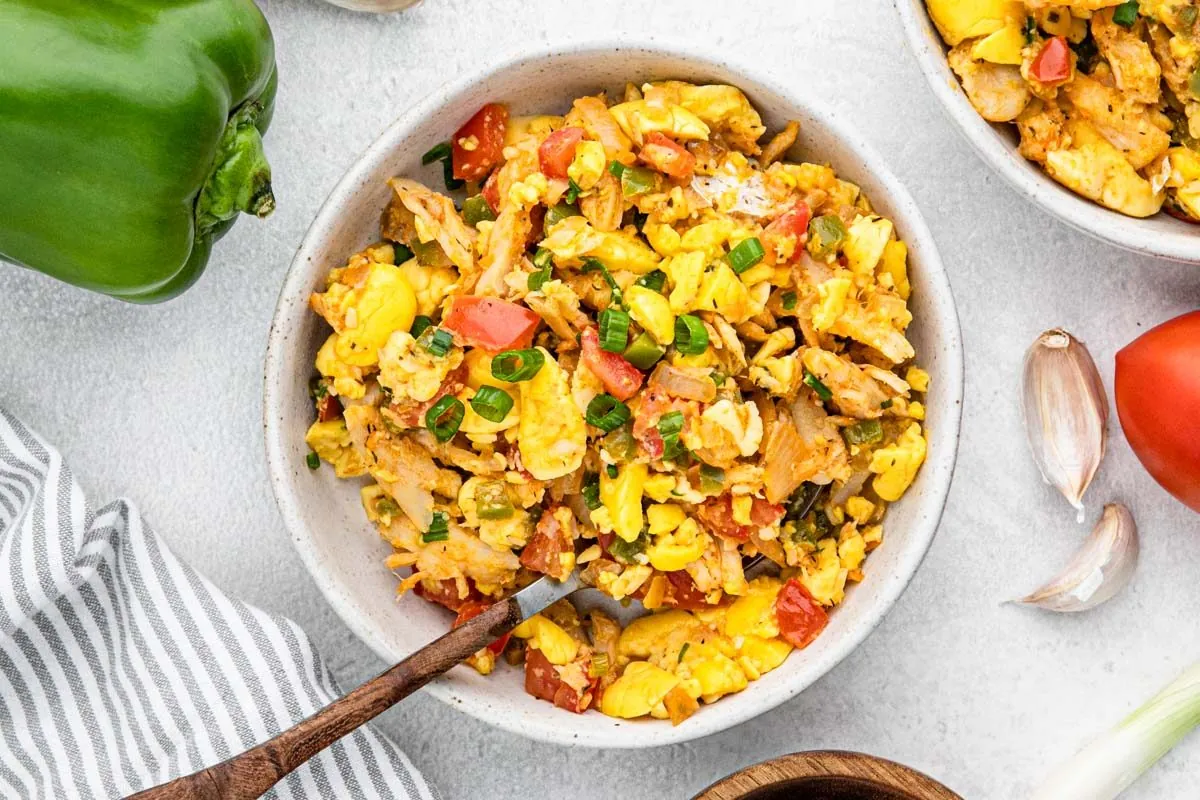
Ask a Jamaican what the national dish is and you'll get one answer: Ackee and Saltfish. It looks like scrambled eggs, it isn't, and the story of how those two ingredients ended up on the same plate is the story of Jamaica itself.
What ackee is
Ackee is a fruit, and it's Jamaica's national fruit. It grows on a tree that came from West Africa during the slave trade, which is where the name comes from too: it traces back to akye in Twi, a language of Ghana.
Its scientific name, Blighia sapida, honors Captain William Bligh, who carried the plant from Jamaica to England in 1793. Yes, that Bligh, of the Bounty.
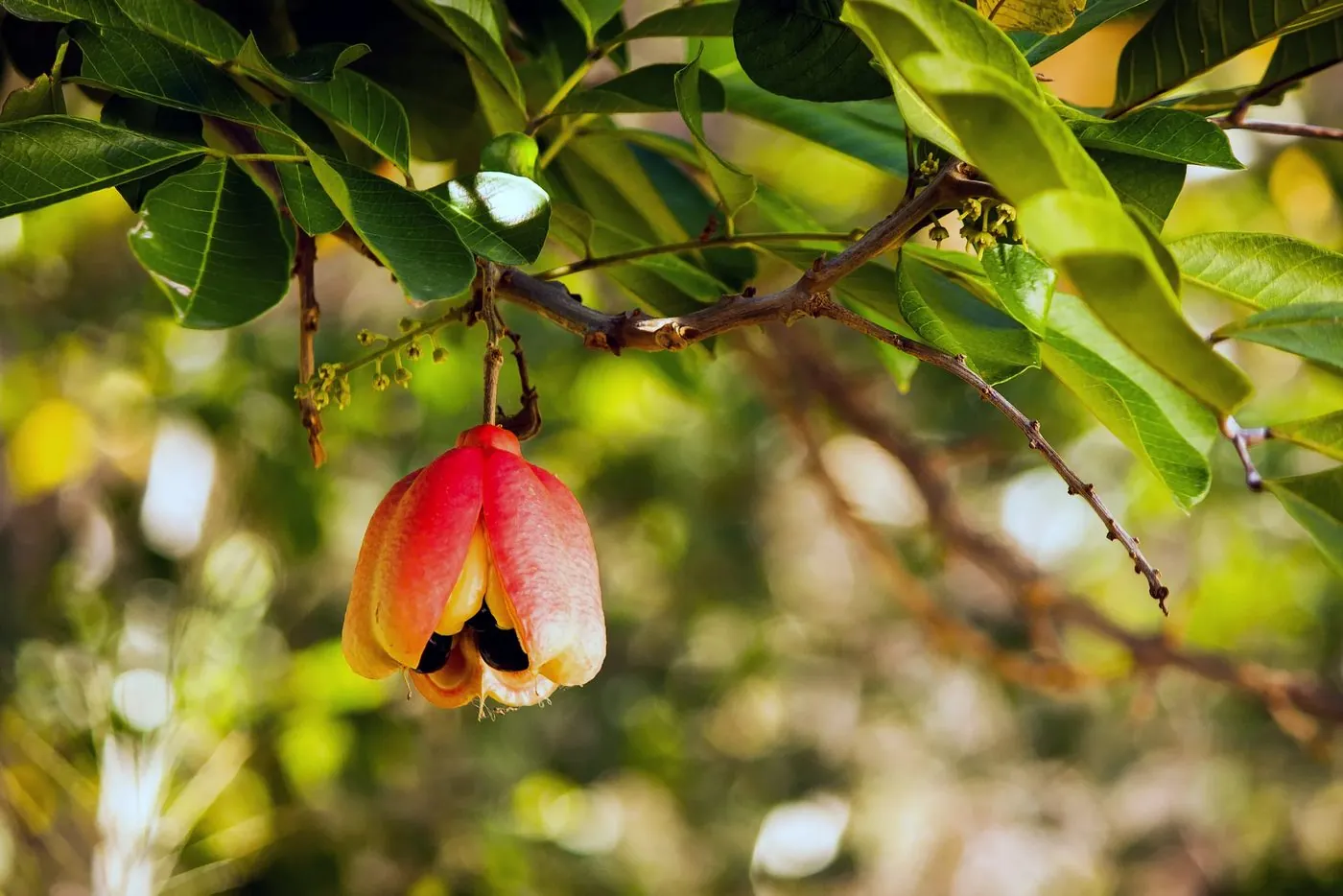
When the fruit is ready, the red pod splits open on the tree on its own, showing three creamy yellow lobes called arils around glossy black seeds. Those lobes are what you eat. Cooked, they're soft and mild with a faint nuttiness, and they break apart in a pan into something that looks remarkably like scrambled egg.
Is ackee poisonous? Yes — until it ripens
Here's the part that surprises people: unripe ackee is genuinely poisonous. It contains hypoglycin A, a natural toxin that can cause a dangerous drop in blood sugar, and because the toxin is heat stable, cooking does not remove it. This isn't superstition, it's chemistry — and it's why Jamaican cooks are so particular about ackee, and why you'll hear the rule repeated in every kitchen on the island.
How ackee is made safe: Let the fruit ripen fully on the tree until the red pod splits open on its own — never force a closed pod open or pick it early. Eat only the soft yellow arils, and throw away the black seeds and the pink-to-red membrane, which stay toxic at every stage. Because the toxin survives heat, cooking alone will not make unripe ackee safe. If you aren't harvesting it yourself, buy canned or frozen ackee from an FDA-approved processor — it has already been picked ripe and processed safely.
Why you mostly see it in a can
Because of that toxin, the United States regulates ackee imports closely. The FDA evaluates processors one plant at a time and maintains a list of approved ones whose canned and frozen ackee can be imported. Product from unapproved processors gets held at the border.
The practical result: fresh ackee is almost impossible to find in Central Texas, and the canned ackee on Caribbean grocery shelves comes from plants that have been vetted. Properly processed ackee is safe to eat.
Where the saltfish comes in
Saltfish is salted, dried cod, and it has nothing to do with the Caribbean climate. It arrived through colonial trade routes: cod fished in the North Atlantic, salted to survive the voyage, and shipped to the islands as cheap protein for enslaved people.
What began as a ration became a cornerstone. Jamaicans took a preserved fish from thousands of miles north and built some of the island's best-loved food around it. Before you cook it, you soak and boil the fish to pull out the salt, then flake it.
How the dish comes together
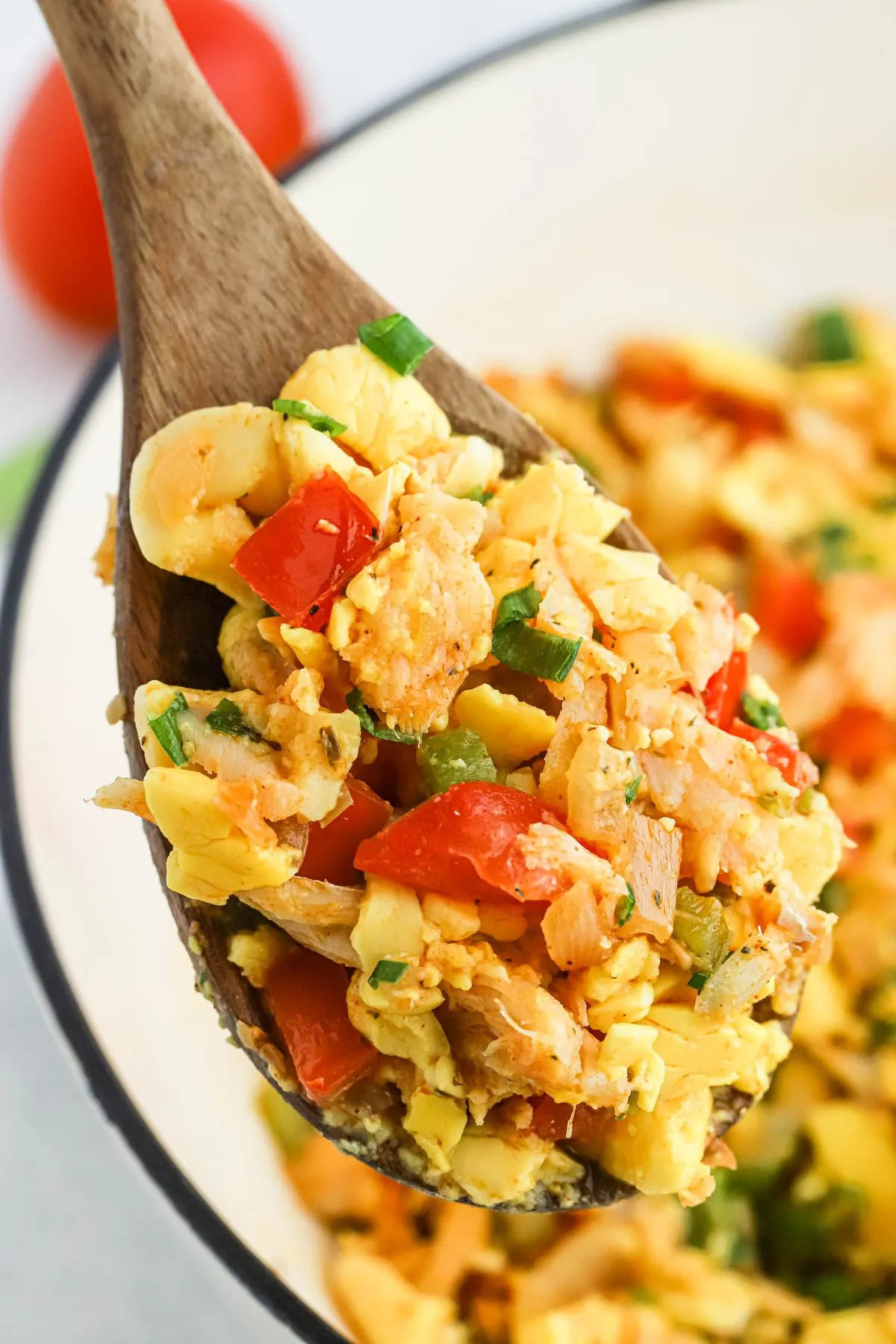
The flaked saltfish is sautéed with onion, sweet pepper, tomato, thyme, scallion, and scotch bonnet. The ackee goes in at the very end and is folded through gently, because it's delicate and falls apart if you stir it hard.
You get salt from the fish, sweetness from the peppers, heat from the scotch bonnet, and the mild, buttery ackee holding it all together.
What it's eaten with
It's traditionally a breakfast dish, served with:
- Fried dumplings or festival, the slightly sweet fried dough
- Boiled green banana and ground provisions like yam
- Roasted or fried breadfruit
- Callaloo on the side
Plenty of Jamaicans will eat it any time of day, and many abroad save it for Sunday.
Trying it
If you grew up on this, you know exactly what you're missing. If you didn't, Ackee and Saltfish is one of the most distinctive things in Caribbean cooking, and it tastes like nothing else.
Ask us what we're cooking. And if you want something more familiar first, our first-timer's guide has you covered.
← Back to all posts