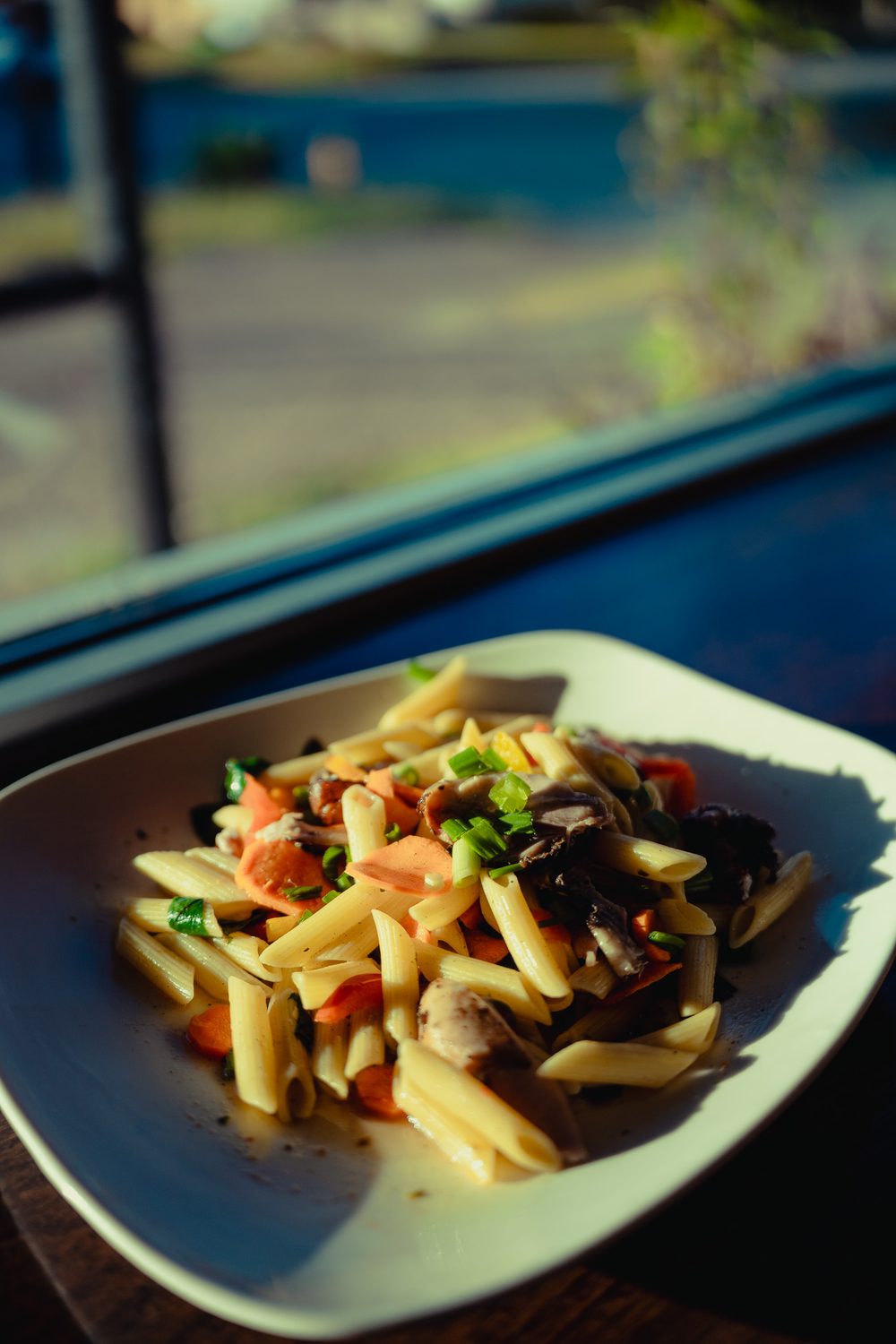
Rasta pasta is one of the most ordered dishes on our menu, and one of the most misunderstood. Somewhere in the last twenty years it became normal in the United States to serve it swimming in alfredo sauce. Here's where the dish actually comes from, and why we don't make it that way.
Where the name comes from
The story that gets passed down starts in 1985 in Negril, Jamaica, at a restaurant called Paradise Yard. The chef, Lorraine Washington, put together a plate of fettuccine with tomato sauce and ackee for a crew of hungry construction workers.
When the workers saw the plate, they saw red, yellow, and green, the colors of Rastafari, and they gave the dish its name. Some tellings add that the long ribbons of fettuccine reminded them of locs.
Like a lot of restaurant history, this story lives mostly in the retelling, so treat the details as lore rather than documentation. But every version agrees on the part that matters: the name describes what the plate looked like.
The name is a description, not a label
That's the whole point. Rasta pasta isn't called that because it comes from Jamaica, and it isn't called that because of the seasoning. It's called that because when the plate hits the table, you see red, gold, and green.
Which means the color isn't decoration. It's the dish. If you can't see it, you're eating pasta with a Jamaican name on it.
A word on Rastafari and food
The name points to Rastafari, and Rastafari comes with a way of eating. Many Rastas follow what's called an ital diet: food grown from the ground, kept as natural and unprocessed as possible, and most of the time no meat at all. The guiding idea is to eat what the earth provides rather than what comes from animals.
That's part of why a vegetable-forward pasta carrying the colors of Rastafari makes sense in the first place. Ours is built the same way — peppers, spinach, and Jamaican seasoning — and it's fully vegan unless you add chicken.
What alfredo actually is
Real alfredo comes from Rome in the early 1900s, where a restaurateur named Alfredo di Lelio tossed fettuccine with nothing but butter and good parmesan. No cream at all. The heavy-cream version most Americans know was built later, on this side of the Atlantic, and usually adds garlic along the way.
Either way, alfredo is a mild, rich dairy sauce, and being mild is its job. Butter and aged cheese are supposed to be the loudest things in the bowl.
Three reasons it doesn't belong on rasta pasta
1. It erases the colors
A white cream sauce coats everything it touches. Your red, yellow, and green peppers go beige under it. The one thing the dish is named for is the first thing alfredo takes away.
2. It fights the seasoning
Jamaican seasoning is built on pimento, scotch bonnet, thyme, scallion, and garlic. Those flavors are sharp and aromatic on purpose. Heavy cream and hard, salty aged cheese are designed to round off exactly that kind of edge. Parmesan doesn't sit next to jerk seasoning, it argues with it, and then it wins.
3. Jamaica already has its own cream
If you want a rich, creamy sauce, you don't have to borrow one. Coconut milk has been doing that job in Jamaican kitchens for generations. It's in rice and peas, in rundown, in our curries.
Coconut milk carries heat instead of smothering it, and its natural sweetness balances scotch bonnet the way dairy never quite does. It's creamy and it tastes like the island the dish came from.
To be clear: creamy isn't the problem
We're not purists about this. The dish has been evolving for forty years, it started with tomato sauce and ackee and almost nobody makes it that way now, and plenty of excellent rasta pasta is creamy. Ours is.
The problem isn't richness. It's one specific sauce borrowed from another cuisine that mutes the seasoning and hides the colors. Creamy with coconut milk and Jamaican seasoning is a different thing entirely.
How to judge a plate of rasta pasta
- Can you see the colors? Red, yellow, and green peppers should be visible, not buried.
- Can you taste the seasoning? You should get pimento, thyme, and a little heat, not just cheese and butter.
Come try ours
Our rasta pasta is seasoned the Jamaican way and built so you can still see what the dish was named for. Add chicken if you want it heartier, or pair it with something else off the menu if it's your first visit.
And if you like a little more fire, read our heat guide before you order.
← Back to all posts